I. Match the Silicon Nitride Technical Parameters to the Operating Conditions
When selecting ceramic bushings, ceramic guide sleeves, or insulating sleeves, don’t just focus on the words “silicon nitride.” For high-toughness
silicon nitride ceramic parts produced by gas-pressure sintering or pressureless sintering, the following general property ranges can be used as an initial reference:
- Density: 3.2–3.3 g/cm³
- Flexural Strength: Typically 700–900 MPa; some high-toughness grades can reach 800–1,000 MPa
- Vickers Hardness: 1,500–1,800 HV, approximately equivalent to HRA 92
- Fracture Toughness: 6–8 MPa·m¹ᐟ²
- Coefficient of Thermal Expansion: Approximately 3.1–3.2 × 10⁻⁶/°C
These properties give silicon nitride better thermal shock resistance than alumina and help reduce the risk of sudden cracking compared with some more brittle ceramics. Its relatively low coefficient of thermal expansion can also help reduce thermal stress in assemblies involving silicon wafers and certain metals.
Note: These are general reference ranges, not guaranteed specifications. Actual properties depend on the material grade, sintering process, and manufacturer.
In terms of precision machining, inner diameter tolerances can be negotiated within ±0.005–0.01 mm, with roundness around 0.005 mm and a surface roughness of Ra 0.2 μm, which meets the requirements for most precision industrial applications. For semiconductor handling or vacuum insulation applications, cleanliness, residual metal-ion contamination, and dielectric strength should also be verified separately. Hangzhou Haihe Precision Ceramics Co., Ltd. provides drawing-based small-batch validation using gas-pressure sintering and subsequent precision grinding. For thin-walled parts, deep-hole components, and stepped sleeves, the company typically produces samples for evaluation before moving to mass production, helping reduce the risk of rework.
II. Silicon Nitride Market Validation and Product Positioning
The global market for silicon nitride ceramic products is projected to reach approximately $1.345 billion in 2025 and is expected to reach approximately $2.181 billion by 2032, with a compound annual growth rate (CAGR) of 7.15%. Automotive components account for about 35% of the market, and the Asia-Pacific region is the largest consumer market. If we focus solely on industrial structural components, the market is projected to reach approximately 6.54 billion yuan in 2024 and approximately 8.98 billion yuan in 2031, with a relatively moderate growth rate. These two sets of data are not contradictory; the former encompasses a broad range of applications, including bearings and electronic semiconductors, while the latter focuses on industrial wear- and heat-resistant components.
Silicon nitride sleeves should not be positioned as “replacements for all metal sleeves”; they are better suited for “three-high” operating conditions: high temperature, high abrasion, and high corrosion, combined with requirements for electrical insulation or non-magnetic properties. In standard water-cooled, ambient-temperature grease-lubricated, and low-speed applications, metal sleeves remain more cost-effective; however, in chemical pumps, photovoltaic thermal fields, semiconductor transport, and lithium-ion battery powder production lines, the cost savings from reduced downtime offered by silicon nitride become more pronounced.
III. Strengths, Weaknesses, and Target Applications of Silicon Nitride Ceramic Bushings
The advantages are clear: excellent wear resistance, high-temperature resistance, corrosion resistance, low density, and electrical insulation. In chemical pump sliding sleeves operating continuously in particle-laden media for 2,000 hours, bore wear can be kept below 0.02 mm. After 500 thermal shock cycles at 600°C, high-toughness formulations can retain more than 85% of their original flexural strength. Ceramic bearing sleeves used in semiconductor wafer handling and insulating sleeves for vacuum chambers require low particle generation and non-magnetic properties. Thermal insulation sleeves for polycrystalline silicon reduction furnaces and insulation sleeves for monocrystalline silicon thermal-field systems prioritize thermal shock resistance, with long-term operating temperatures to be verified by material grade and manufacturing process, ranging from 800°C to above 1,200°C. Sleeve components used in lithium battery cathode material conveying systems require high purity and minimal risk of metallic contamination.
We must also be transparent about the challenges: the consistency of raw powder materials and sintering processes affects costs; hard and brittle materials are sensitive to installation impacts; and the prototyping cycle for non-standard components is longer than that for standard parts. Therefore, when requesting a quotation, it is more effective to provide the manufacturer with the medium composition, temperature profile, sliding speed, mating shaft material, and allowable tolerances, rather than simply asking, “How much does one piece cost?”
IV. How to Choose a Silicon Nitride Sleeve Manufacturer?
When selecting a
silicon nitride bushing sleeve manufacturer, consider three key factors: whether they can provide test data under actual operating conditions—rather than just brochures; whether finishing is done in-house or outsourced, and whether responsibility for the concentricity of thin-walled parts is traceable; and whether they accept third-party testing for small-batch samples. It is more efficient to first conduct small-batch lifespan testing before discussing full-line replacement, rather than simply pushing for lower prices.



 Moble: +86 18122974730
 Phone: +86 746 3386888
 Email: admin@cerampart.com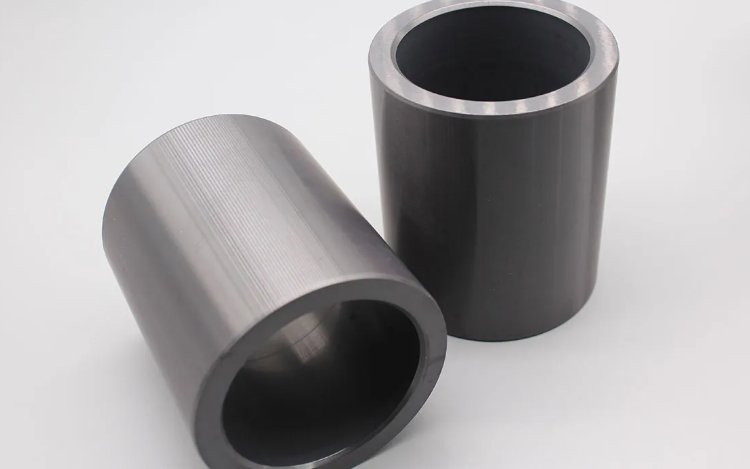

 Mobile version