A pin is a component thats connect parts. It has a small diameter and length and is usually used for positioning, locking, or transmitting force. Locating pins are mechanical parts that help figure out how parts fit together. Choosing the right way to fit them together is very important for making sure the assembly is accurate and reliable.
Taking the automotive industry as an example, the car body is usually made by welding hundreds of sheet metal stamping parts on nearly 100 assembly fixtures. This process involves more than 4,000 weld points. The design and manufacture of welding fixtures account for 10% to 20% of the total cost of automobile manufacturing. According to statistics from the US automotive industry, 72% of welding errors are caused by positioning and clamping. The design of welding fixtures is based on a single body datum, which means that the design datum, stamping datum, welding datum, and inspection datum are all the same. Welding fixtures are important tools for making the unification of welding datums, and the locating pins in the welding fixtures are key components to ensure the dimensional accuracy of body parts welding.
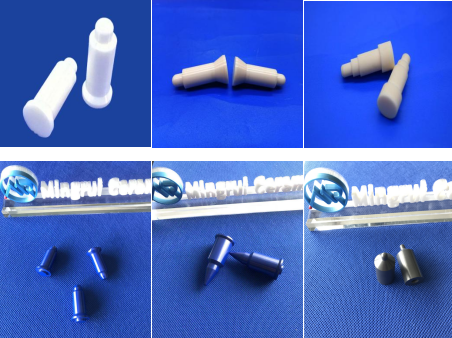
As a crucial component ensuring consistent welding precision and stability, choosing the right material for locating pins is very important. During the positioning process, locating pins interact with sheet metal parts, which causes wear. This wear not only causes positioning deviations and affects welding quality but also reduces the pin's lifespan and increases manufacturing costs. Pins, as mechanical components, existed before the Industrial Revolution; however, the materials used to make them have gotten better and better as industrial technology has improved. The first pins were probably just wooden or stone rods used to connect simple mechanical devices, such as wheels and axles. With the advent of the Industrial Revolution, pins began to be widely used in various mechanical equipment, and the material gradually shifted to metals such as iron and copper. Today, with the continuous emergence of high-precision industries, the precision of locating pins needs to remain stable at all times, and sometimes they must withstand rough, unexpected impacts. Traditional metal locating pins are clearly no longer able to keep up with the pace of industrial development. So, mechanical engineers are now looking at advanced ceramics, which feature high hardness, good wear-resistance, and thermal-resistance, and are thermally stable. Blue zirconia ceramics, alumina ceramics, and silicon nitride ceramics are some of the ceramic materials that have been studied and used the most for
different types of ceramic positioning pins.
Compared to zirconia ceramics, the toughness of alumina and silicon nitride ceramics is inherently difficult to enhance; zirconia ceramics, on the other hand, are very tough on their own (they have a fracture toughness that is 3 to 5 times that of alumina). Of course, it's important to note that zirconia ceramics have a downside: they don't hold; their resistance to hydrothermal aging and impact is relatively poor. If you do not want to sacrifice the high toughness advantages of zirconia, while also improving its shortcomings in strength and hardness, Mingrui engineers suggest that an effective approach is to reinforce the zirconia matrix with alumina.
"Al2O3 has a high hardness and a high elastic modulus, and it works well with ZrO2 in both chemical and physical ways. So, the incorporation of Al2O3 into a ZrO₂ matrix enables a synergistic combination of advantages; the resulting Al2O3/ZrO2 composite ceramic (ATZ) combines the beneficial properties of both alumina and zirconia."
It can offer exceptional resistance to high temperatures, corrosion, and wear, alongside high strength and high toughness. Furthermore, this approach significantly enhances the aging resistance of the zirconia ceramic, thereby providing a perfect solution for material selection challenges regarding ceramic positioning pins.
Located in Yongzhou, China, Mingrui Ceramic has accumulated abundant experience in the R&D and production of custom ceramic parts. Mingrui has extensive experience with different types of ceramic locating pins, among which
zirconia ceramic locating pins are the most commonly produced. We are also able to provide professional recommendations in material selection.



 Moble: +86 18122974730
 Phone: +86 746 3386888
 Email: admin@cerampart.com
 Mobile version