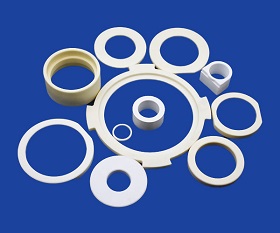
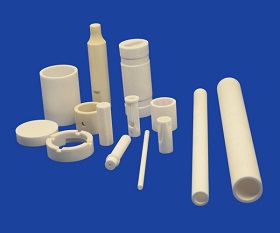
In industrial manufacturing and machining, dense ceramic components such as alumina (Al₂O₃) and zirconia (ZrO₂) are often contaminated by complex pollutants including coolant, oil, dust, and even sweat during machining, handling, or operation. Vacuum valve seals, semiconductor equipment support plates, ceramic substrates, and wear-resistant ceramic bushings are all affected. Such contaminants not only compromise appearance but may also adversely affect subsequent processes such as metallization, brazing, or bonding, or compromise reliability during high-temperature operation.
Can ceramic components be cleaned directly using ultrasonic water baths? Is wiping with alcohol a viable option? What specific precautions should be observed? Based on the practical experience of
Mingrui Ceramic, this article addresses these questions.
I. Sources of Ceramic Contamination
Processing Stage: Residual abrasive powders, cooling fluids, or grease remaining after cutting, grinding, or polishing.
Handling Contact: Worker perspiration, fingerprints (containing oils and salts), or dust accumulation during transport.
Storage Environment: Airborne dust, packaging debris, or fibers.
If not thoroughly cleaned, several issues may arise: poor adhesion during subsequent metallization or bonding processes; localized carbonization or volatilization under high-temperature conditions, leading to contamination of process chambers; or increased outgassing in vacuum applications, compromising system stability.
II. Ultrasonic Water Cleaning: The Most Commonly Used Method
Principle: Ultrasonic waves generate cavitation bubbles within a liquid medium. The resulting micro-impact forces dislodge surface particles.
Applicable Materials: Dense Alumina (Al2O3), Dense Zirconia (ZrO2), Dense Silicon Carbide (SiC), and Dense Silicon Nitride (Si3N4).
Operational Recommendations (Based on Practical Experience):
1. Cleaning Fluid: Deionized water is recommended. Ordinary tap water tends to leave water spots, and impurities in the water may adhere to the ceramic surface.
2. Cleaning Agents: For light oil contamination, hot water alone may suffice. For heavier oil contamination, a small amount of a neutral or weakly alkaline cleaning agent may be added. Avoid strong acids or bases, as they may corrode the glassy phase or residual binders within the ceramic material.
3. Ultrasonic Power and Duration: For standard industrial ultrasonic cleaning machines (40 kHz, power density of approximately 10–20 W/L), a duration of 5–15 minutes is typically sufficient. For products known to contain micro-cracks or possess fragile edges — thin-walled components, for example — the power output may be appropriately reduced, or the cleaning duration shortened to less than 5 minutes.
4. Rinsing: If a cleaning agent was used, rinse 1–2 times using deionized water.
5. Drying: Dry using hot air (80–110°C) or a vacuum oven. This ensures that residual moisture, particularly within blind holes, grooves, or porous structures, is completely eliminated. (Source: Jiemeng Ultrasonic Cleaning Machines)
Special Note: Ultrasonic water cleaning is not recommended for Boron Nitride (BN) ceramics. They exhibit high water absorption and are difficult to dry thoroughly; residual moisture may compromise performance in vacuum or high-temperature applications. Porous ceramics such as ceramic filtration membranes and porous supports, are similarly difficult to dry after water washing. For these materials, organic solvent wiping or vacuum drying methods are recommended instead.
III. Organic Solvent Wiping: A Good Complement for Degreasing
This method works best in three situations: when oil contamination is heavy, such as cutting oils, lubricants, or rust-preventive oils; when the parts cannot get wet, for example,
ceramic-to-metal assemblies; or when you just need to clean a small area quickly.
The most commonly used solvents are isopropyl alcohol (IPA), anhydrous ethanol, and acetone. Acetone is effective but worth being careful with — it can corrode certain rubbers and plastics, and it catches fire more easily than the other two. For general cleaning, dip a lint-free cloth or cotton swab in solvent and wipe the contaminated surface directly. If the parts have complex geometry or you are doing batch degreasing, soaking them in solvent is also fine, and adding ultrasonic agitation helps. Just make sure to use an explosion-proof ultrasonic cleaning machine and take proper fire and explosion prevention precautions.
*Acid and alkali precautions: Most industrial ceramics (such as alumina and silicon nitride) have good alkali resistance, but cleaning agents containing hydrofluoric acid (HF) must be strictly avoided, as hydrofluoric acid can severely corrode the ceramic matrix.
IV. Plasma Cleaning and High-Temperature Baking (as Supplementary Processes)
These two methods do not belong to routine cleaning procedures; however, they are highly valuable in specific scenarios.
Principle of Plasma Cleaning: A plasma is generated within a low-pressure gas environment, utilizing a combination of physical bombardment and chemical reactions to remove organic contaminants from the surface.
Applicability: Parts requiring extremely high levels of cleanliness (e.g., the inner walls of vacuum chambers, ceramic substrates before coating, and precision ceramic surfaces intended for bonding).
Advantages: Leaves no liquid residue and can achieve molecular-level cleanliness.
Limitations: High equipment costs, limited batch processing capacity, and poor efficacy regarding the inner walls of deep holes.
Function of High-Temperature Baking: Removes adsorbed surface moisture or volatile organic compounds; it cannot, however, remove solid particulate matter.
Typical Parameters (for reference only): Alumina Ceramic Parts: 200–300°C for 1–2 hours (in air or vacuum). Silicon Carbide Ceramics: Higher temperatures may be applied depending on specific application requirements. Note: Prior to baking, ensure that the ceramic surface is free of grease and other contaminants; otherwise, these substances may carbonize and leave permanent stains.
V. Summary of Cleaning Efficacy and Operational Experience
In industrial manufacturing, most ceramic components do not require complex validation procedures for every single batch. Under adequate lighting, a simple visual inspection is sufficient to detect the presence of obvious oil films, water stains, particulate matter, or fingerprints. For critical batches or those subject to stringent quality requirements, a representative sample of parts may be selected for surface residue analysis using an optical microscope.
Drawing upon the experience outlined in this document, several practical principles can be summarized:
1. Cleaning of ceramic parts typically involves a multi-step sequence: Degreasing → Water Washing → Rinsing → Drying → (Baking, if necessary).
2. The selection of materials and cleaning methods should be determined based on the type of contamination, the specific characteristics of the ceramic material, and the requirements of subsequent processing steps: Dense Alumina, Zirconia, Silicon Carbide, and Silicon Nitride → Ultrasonic Water Washing + Hot Air Drying; Boron Nitride (BN) → Wiping with Organic Solvents; Porous Ceramics → Solvent Cleaning + Vacuum Drying.
3. The drying stage is the most critical step: Ensure that blind holes, grooves, and contact surfaces between stacked parts are completely free of residual moisture; the use of a vacuum oven or a hot-air circulation dryer is recommended where appropriate.
4. For mass production, it is advisable to first validate the cleaning parameters using a small sample batch before integrating the process into the main production line, thereby ensuring process stability and reliability. By adhering to the methods outlined above, manufacturers can effectively ensure the cleanliness of ceramic components while avoiding material damage and enhancing the operational reliability of their equipment.



 Moble: +86 18122974730
 Phone: +86 746 3386888
 Email: admin@cerampart.com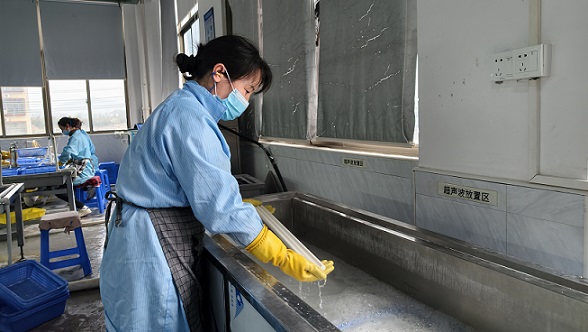

 Mobile version