Ceramic Tube / Ceramic Rod / Ceramic Plate / Ceramic Valve / Ceramic Plunger / Ceramic Pump Manufacturer
Focus on Alumina / Zirconia ceramic parts R&D and production
+86 -181 2297 4730

Ceramic Tube / Ceramic Rod / Ceramic Plate / Ceramic Valve / Ceramic Plunger / Ceramic Pump Manufacturer
Focus on Alumina / Zirconia ceramic parts R&D and production
+86 -181 2297 4730


 Moble: +86 18122974730
 Phone: +86 746 3386888
 Email: admin@cerampart.comSkype: +86 18122974730Wechat: +86 18122974730
Alumina ceramics (Al2O3) are widely used in critical components such as pipe linings, grinding media, insulating parts and mechanical seals due to their high hardness, corrosion resistance, insulation and high-temperature resistance. However, the commonly available high-purity 95% and 99% alumina ceramics on the market, despite differing by only 4 percentage points, exhibit significantly different performance characteristics and application scenarios. How can one scientifically select the appropriate alumina ceramic parts type based on actual operating conditions? This article provides an in-depth analysis.
| Parameter | 95% Alumina Ceramic | 99% Alumina Ceramic |
| Al2O3 Content | ≥95% | ≥99% |
| Density (g/cm³) | 3.6–3.7 | 3.8–3.95 |
| Rockwell Hardness (HRA) | 85–87 | 88–92 |
| Flexural Strength (MPa) | 280–320 | 300–350 |
| Operating Temperature | ≤1600°C | ≤1700°C |
| Surface Roughness | Ra 0.8–1.6 μm | Ra 0.4–0.8 μm |
As the data shows, 99% alumina ceramics outperform 95% alumina ceramics in terms of density, hardness, and strength, which translates to higher wear resistance and a longer service life.
95% alumina ceramics: The alumina content is approximately 95%, with the remaining 5% consisting of other elements. The remaining portion consists mainly of additives such as silicon, calcium, and magnesium. The addition of these additives is akin to bringing in members with different backgrounds into a team. This reduces the difficulty of sintering to some extent, allowing the ceramic to take shape at relatively low temperatures. However, introducing additional components inevitably affects the material's overall purity, resulting in slightly lower density and mechanical properties. An easy way to understand this is to imagine a glass of pure fruit juice: adding a small amount of another ingredient may enhance its flavor, but it also dilutes the purity and concentration of the original juice. Similarly, while additives can improve certain characteristics, they inevitably reduce the intrinsic properties associated with a highly pure material.
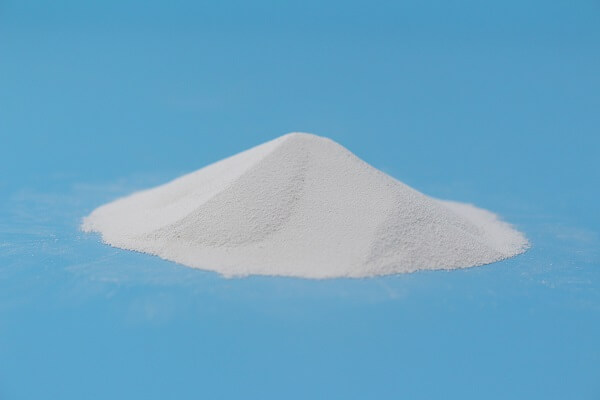
With 99% alumina content and minimal impurities, these ceramics are about as pure as it gets. They contain only about 1% additives, such as yttrium oxide (Y2O3), which are used to stabilize the crystal structure and enhance the ceramic’s high-temperature and mechanical properties. Their high purity gives them superior intrinsic characteristics.
Hardness and Wear Resistance: 99% alumina ceramic has a higher hardness, with a Mohs hardness of approximately 9, while 95% alumina ceramic has a Mohs hardness of about 8.5. In wear-resistant applications, such as mechanical seal rings, 99% alumina ceramic can better withstand friction wear due to its high hardness, resulting in a longer service life than 95% alumina ceramic. In applications involving seal rings for chemical pumps, the replacement cycle for 99% alumina ceramic seal rings is approximately 1.5 times longer than that of 95% alumina ceramic seal rings.
High-Temperature Resistance: 99% alumina ceramic features superior high-temperature resistance, withstanding temperatures above 1,700°C, whereas 95% alumina ceramic generally withstands temperatures around 1,600°C. When furnace or kiln linings are exposed to temperatures exceeding 1,650°C on a regular basis, 99% alumina ceramic proves its worth. It delivers reliable, long-term performance, supports stable kiln operation, and significantly reduces maintenance downtime.
Electrical Insulation: Both materials possess good electrical insulation properties; however, due to its high purity and lower concentration of internal impurity ions, 99% alumina ceramic offers superior electrical insulation. In the electrical insulation and encapsulation of electronic components, where insulation reliability is critical, 99% alumina ceramic better meets these demanding requirements, ensuring the long-term stable operation of electronic equipment.
Chemical Stability: 99% alumina ceramics offer superior chemical stability. In corrosive environments with strong acids and alkalis, such as the linings of chemical reaction vessels, 99% alumina ceramics have greater corrosion resistance, effectively preventing erosion by the medium, extending equipment service life, and reducing maintenance costs.
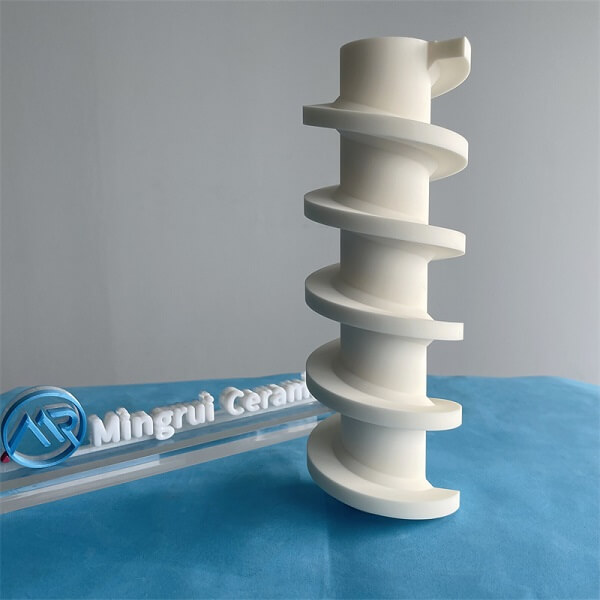
95% Alumina Ceramic Applications: Due to their high cost-effectiveness, they are widely used in general industrial applications. In textile machinery, it is used to manufacture ceramic guides, leveraging its hardness and wear resistance to ensure smooth yarn transport; in the electronics industry, 95% alumina ceramic is commonly used as ceramic insulating substrates, packaging materials, and high-voltage switching devices. Its excellent insulating properties and moderate cost allow electronic equipment to operate stably without incurring high costs for manufacturers. In the mechanical industry, 95% alumina ceramics are commonly used for wear-resistant components such as bearings, seals, and cutting tools. Their good hardness and wear resistance make them suitable for applications where components are exposed to friction and mechanical stress. In chemical processing equipment, 95% alumina ceramics are used for corrosion-resistant pipes, valves, and other components. Their stable chemical properties allow them to withstand exposure to many acids and alkalis, making them suitable for demanding chemical environments.
Applications of 99% Alumina Ceramics: 99% alumina ceramics are mainly used in applications where higher purity, better electrical insulation, and tighter dimensional control are required. In aerospace applications, 99% alumina ceramics can be used in high-temperature components due to their high hardness, thermal stability, and low material degradation at elevated temperatures. In semiconductor manufacturing, 99% alumina ceramics are widely used for precision components such as wafer carriers, ceramic substrates, and vacuum-related parts. Their high purity, excellent insulation properties, and dimensional stability help maintain the accuracy and reliability required during semiconductor processing.
From a manufacturing perspective, 99% alumina ceramics typically cost 30%–50% more than 95% alumina ceramics. This is mainly due to the use of higher-purity raw materials and more demanding sintering processes, which usually require higher temperatures ranging from 1,650°C to 1,990°C.
The higher cost of 99% alumina ceramics is related to their improved purity, density, and performance characteristics, making them suitable for more demanding applications where material properties are a priority.
Cost of 95% alumina ceramics: Due to their relatively lower alumina content and higher proportion of additives, raw material costs are lower. Furthermore, the forming and sintering processes are relatively simple, resulting in lower overall manufacturing costs. In large-scale applications, such as industrial pipe linings, this material effectively controls costs while meeting basic performance requirements.
Cost of 99% alumina ceramics: High-purity alumina raw materials are expensive, and the production process imposes stricter requirements on both technology and equipment—such as the need for sintering furnaces operating at higher temperatures and more precise control instruments, leading to higher costs. However, their exceptional performance delivers greater added value in high-end applications.
Both 95% alumina ceramics and 99% alumina ceramics have their own merits. Thanks to their cost-effectiveness, 95% alumina ceramics have firmly established themselves in mainstream industrial applications; meanwhile, 99% alumina ceramics shine in high-end fields due to their superior performance. With continuous technological advancements, the performance of these ceramics will be further improved through optimized additives and advanced sintering processes, creating broader application opportunities in emerging fields such as new energy and optoelectronics. Therefore, when selecting a ceramic material, it is essential to consider factors such as performance requirements, operating conditions, and cost-effectiveness to ensure the optimal balance between performance and economic value.
Price Difference: 99% alumina ceramics require higher raw material costs and more demanding sintering processes, so their price is typically 30%–50% higher than that of 95% alumina ceramics.
Service Life Difference: Under identical operating conditions, the service life of 99% alumina ceramics can be extended by 30%–60%.
Life Cycle Cost: Although the initial investment is higher, 99% ceramics offer greater long-term cost-effectiveness due to lower replacement frequency, reduced downtime, and lower maintenance costs.
Recommendation: For general industrial applications, prioritize 95% alumina; for critical components requiring extremely high wear resistance, purity, and stability, select 99% high-purity ceramics. When it comes to alumina sheet, for example, the 95% vs. 99% decision is rarely black and white. You have to weigh your real-world operating conditions against the performance gains and, of course, the cost.Ceramics quality Ceramics Process Ceramice after-sale Customer witness Patent Certificate
Ceramic Flange Ceramic BushingS Ceramic PlungerS Ceramic Pump ValveS

ADD:Southeast corner of the intersection of Changliu Road and Wangzhou Road, Qiyang High-tech Industrial Development Zone, Yongzhou City, Hunan Province, 426141,China
Mob:+86 181 2297 4730 Tel:+86 746 3386888
WhatsApp/Wechat:+86 18122974730 Email:admin@cerampart.com
 Mobile version