E-mail:admin@cerampart.com

Which Is Better: Zirconia Ceramic Cylinder Liners or Silicon Carbide Ceramic Cylinder Liners?
Time:202026-11-26
Zirconia ceramic cylinder liners and silicon carbide ceramic cylinder liners are both used in demanding industrial applications where wear resistance, mechanical strength, and chemical resistance are important. However, these two materials have different physical and mechanical properties, making each suitable for different operating conditions. So, which material is better for ceramic cylinder liners? The answer depends on the specific application, operating temperature, mechanical loads, and wear conditions. Below is a detailed comparison of silicon carbide and zirconia ceramic cylinder liners to help you choose the right material.
I. Zirconia Ceramic Cylinder Liners
Advantages:
High Toughness: Zirconia ceramic has relatively high toughness among ceramic materials, offering excellent resistance to crack propagation and the ability to withstand a certain degree of mechanical impact. This allows zirconia ceramic cylinder liners to perform better in operating conditions involving impact and vibration.
High Strength: Zirconia ceramics have high compressive strength and remain stable under high pressure, making them suitable for use in high-pressure systems.
Good Corrosion Resistance: Zirconia exhibits good resistance to many acids and alkalis and can be used in certain corrosive environments. Its corrosion resistance depends on the specific chemical medium and operating conditions.
Thermal Expansion Coefficient Close to That of Metals: The thermal expansion coefficient of zirconia is similar to that of certain metallic materials. Therefore, when used in conjunction with metal components, it can help reduce stress caused by differences in thermal expansion coefficients.
Disadvantages:
Relatively Low Temperature Resistance: Although zirconia ceramics have good temperature resistance, their high-temperature performance is generally inferior to that of silicon carbide ceramics, making them less suitable for extremely high-temperature applications.
Higher Cost: The production cost of zirconia materials is relatively high. High-quality zirconia cylinder liners, in particular, can be quite expensive.
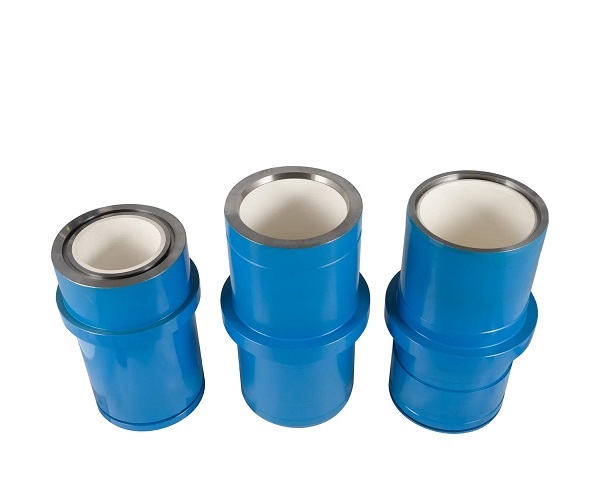
II. Silicon Carbide Ceramic Cylinder Liners
Advantages:
Extremely High Hardness: Silicon carbide has extremely high hardness and possesses exceptional wear resistance and scratch resistance, making it suitable for high-wear operating conditions.
Excellent High-Temperature Resistance: Silicon carbide ceramics have excellent high-temperature resistance and can remain stable at temperatures above 1500°C, depending on the material grade and operating conditions, making them suitable for high-temperature applications.
High Thermal Conductivity: Silicon carbide has high thermal conductivity, allowing it to transfer heat efficiently. This helps reduce temperature gradients in the cylinder liner under high-temperature operating conditions, thereby minimizing damage caused by thermal stress.
Good Oxidation and Corrosion Resistance: Silicon carbide maintains good oxidation resistance and resistance to many acids and alkalis, even at high temperatures, making it suitable for harsh chemical environments.
Disadvantages:
Low Toughness: Although silicon carbide has high hardness, its fracture toughness is relatively low compared with zirconia, making it more susceptible to fracture when subjected to impact or significant stress concentrations. This makes it less suitable for applications requiring high impact resistance.
Low Coefficient of Thermal Expansion: Silicon carbide has a low coefficient of thermal expansion, which differs significantly from that of many metallic materials. This may lead to thermal stress during temperature changes, potentially causing cracking or damage if not properly considered in the design.
III. Comparison of Application Scenarios
Zirconia ceramic cylinder liners are better suited for applications requiring resistance to mechanical impact and vibration, as well as operation in medium- and low-temperature environments, such as seals and bearing sleeves in equipment like water pumps and oil pumps.
Silicon carbide ceramic cylinder liners, on the other hand, are better suited for high-temperature, high-wear, and harsh chemical environments, such as slurry pumps and high-temperature industrial equipment.
IV. Zirconia vs. Silicon Carbide: Which Material Should You Choose?
There is no single material that is best for every ceramic cylinder liner application.
- Choose zirconia when fracture toughness, mechanical strength, and resistance to impact are important.
- Choose silicon carbide when high wear resistance, thermal conductivity, and high-temperature performance are the main priorities.
The right choice depends on the balance between mechanical loads, operating temperature, wear conditions, and the required service life.
At Mingrui Ceramic, we specialize in custom technical ceramic components, including zirconia and silicon carbide ceramic parts. With in-house manufacturing and precision machining capabilities, we provide customized ceramic solutions based on customer drawings, samples, and technical specifications. Contact Mingrui Ceramic to discuss your ceramic cylinder liner requirements and find a suitable material for your application
information
- Which Is Better: Zirconia Ceramic Cylinder Liners or Silicon …
- How to Choose Silicon Nitride Ceramic Bushings? — Practical…
- Alumina Ceramic Classifier Wheels/Rotors: Structure, Material…
- 95 Alumina vs. 99 Alumina Ceramic: Key Differences an…
- Yttria-Stabilized Zirconia (YSZ Ceramic): Material Overview a…
- Large Size Ceramic Parts Manufacturer: Breaking Throu…
- How to Clean Ceramic Parts? A Comprehensive Guide to …
- Ceramic Locating Pins: How to Select Ceramic Materials?
Dongguan Mingrui Ceramic Technology Co., Ltd.
TEL:+8618122974730
MB:+86 181 2297 4730 Tel:+86 746 3386888
Skype:+86 181 2297 4730
Email:admin@cerampart.com
ADD:No. 21, Chuangxing Road, Shangsha Second Industrial Zone, Chang'an Town, Dongguan City
 HOME
 WHATSAPP
 CONTACT
 TEL